
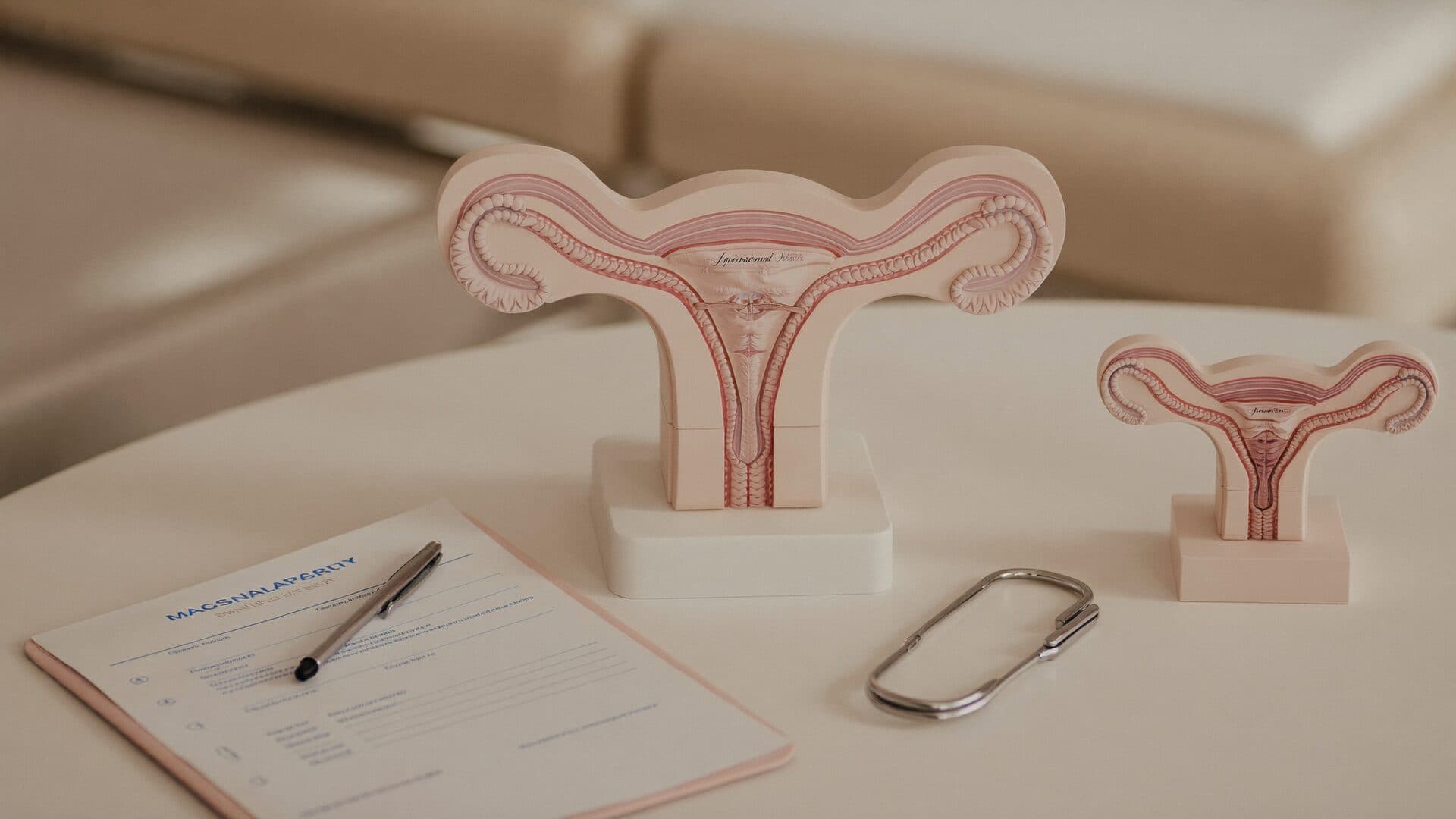
Samsun Treatment of Abnormal Uterine Bleeding
Unusual bleeding should be investigated for the amount, duration, or timing. The treatment plan is determined based on the cause.
Samsun abnormal uterine bleeding treatmentIt aims to determine the cause of bleeding that disrupts menstrual pattern and plan the correct approach, starting with evaluation, story and examination.
Abnormal uterine bleeding; Non-menstrual bleeding involves an unpredictable pattern of bleeding with excessive amounts or prolonged bleeding than expected. The causes of this condition are assessed in two main groups, structural and non-structured, so the review process for each woman is planned and advanced in its own unique way.
In this article, the possible causes of abnormal uterine bleeding, the steps followed during evaluation and the treatment options that can be applied are discussed in detail. Prof. Dr. Aşkı Ellibeş Kaya It is recommended to meet with one-on-one.

What is Abnormal Uterine Bleeding?
Abnormal uterine bleeding is a general concept that describes any type of bleeding that is outside the normal order of the woman's own menstrual cycle. When the amount, duration, or frequency of recurrence of menstrual blood is outside one's usual range, this condition is started to be mentioned and also needs to be evaluated.
Since the bleeding pattern can vary significantly from person to person, it is often assessed by comparing it with one's own habitual cycle whether a bleeding is considered abnormal. The sudden and apparent changes that occur in a short period of time are among the findings that need to be addressed with particular caution.
This condition can be seen as well as in postmenopausal women, in quite different ways than the underlying cause. Therefore, during the evaluation process, features such as the onset, duration and amount of bleeding are recorded in detail.
Although such bleeding may sometimes seem like a one-time disorder, it should be considered as an assessment when it comes to a pattern that repeats or lasts for a long time.The general health status of the person as well as the bleeding itself is part of this assessment.
Some women may not consider such changes to be part of daily life and may not have long-term evaluations, but it is a convenient step to consult a specialist if there is a marked deviation from one's own habits, regardless of the type of bleeding.
Symptoms of Abnormal Uterine Bleeding
Abnormal uterine bleeding is a symptom that can occur in different forms, with some women having menstrual bleeding taking much longer than usual, while some women may experience unexpected spotting or bleeding during periods outside of menstruation; both appearances require evaluation.
The nature of the bleeding; When evaluated in conjunction with color, quantity, and other accompanying symptoms, it may offer important clues to the underlying cause. Therefore, it is questioned in detail during the examination when symptoms begin, how long they last and how they monitor.
Menstrual bleeding lasts longer than usual and ends late than expected
Spotting between periods of menstruation or unexpected bleeding
The amount of menstrual blood is greater than expected
When the menstrual cycle becomes unpredictable in terms of frequency and order
No matter the amount after menopause, there is no indication of any bleeding.
Long-term or frequent recurrent bleeding can affect a person's daily life and energy level over time. Therefore, it is important that symptoms are evaluated not only from a gynecological point of view, but also from a general health perspective as a whole.
When one or more of these symptoms are noticed, planning a gynaecology assessment rather than waiting for the bleeding to pass itself will contribute to an earlier clarification of the underlying cause.
Causes of Abnormal Uterine Bleeding
The causes of abnormal uterine bleeding are evaluated in a fairly wide range and can vary beyond explanation for a single reason. These reasons are generally addressed in two main groups in terms of structural causes and non-structural reasons in terms of ease in daily practice.
Which group is involved is clarified by detailed story, gynecological examination, ultrasound, and additional tests when necessary. Making this distinction right plays an important guiding role in determining the assessment and treatment approach to follow afterwards.
The distinction between the two groups of causes can sometimes be clarified by a single examination, while sometimes requiring multiple examinations to be evaluated together. In this process, a patient approach and regular follow-up make it easier to get the right result.
Structural Causes
Structural causes include polyps that develop within the uterus, myomas that take up space in the uterine wall, and adenomyosis that concerns the uterine muscle layer. Most of these conditions can be detected largely by ultrasonography and their size can be monitored.
In rare cases, malignant changes from the cervix or uterus can also lead to abnormal uterine bleeding. This possibility is carefully and primarily investigated, especially during postmenopausal bleeding.
Although most structural causes can be largely established by ultrasonography, additional methods such as hysteroscopy or tissue sampling may sometimes be used for precise evaluation. These methods are added to the assessment in order to clarify the cause.
Non-Structural Causes
Non-structured causes include ovulation irregularities, clotting disorders, and problems with the thyroid gland. In these cases, there is often no apparent structural disorder that can be detected by ultrasound in the uterus.
Regular or irregular use of certain hormonal drugs can also affect menstrual pattern, causing abnormal bleeding. Therefore, all medications used and their general health history are questioned in detail during evaluation.
Ovulation irregularities can occur more frequently, especially during adolescence and in years approaching menopause. Bleeding irregularities that occur during these periods are often associated with hormonal fluctuations, but should still not be excluded from evaluation.
Structural reasons: This group includes uterine polybi, myoma, adenomyosis, and rarely malignant changes from the cervix or uterus.
Unstructured causes: This group includes ovulation irregularities, clotting disorders, problems with the thyroid gland and the use of hormonal drugs.
What to Consider in Postmenopausal Bleeding

Every bleeding seen in a woman who has undergone menopause should be investigated regardless of the amount and no matter how short it takes. Even a small amount of staining should not be excluded from the scope of this assessment.
Most postmenopausal bleeding occurs due to benign causes and is often not associated with a serious problem. However, this conclusion can only be reached after a thorough examination, no presumption is made.
Therefore, it is recommended to plan a gynaecology assessment without wasting time when any postmenopausal bleeding is detected. Early evaluation makes it easier for the cause to become clearer in a shorter period of time and, if necessary, to begin treatment earlier.
Measuring the thickness of the endometrium by ultrasonography in postmenopausal bleeding assessment is one of the first steps. According to the findings, the examination is completed by taking a tissue sample with endometrial biopsy if necessary.
Even if there is no obvious finding as a result of the evaluation, it is recommended to reassess recurrent bleeding during the postmenopausal period. Regular follow-up allows for early detection of possible changes over time.
Diagnosis and Evaluation Process

Evaluation of abnormal uterine bleeding begins with a detailed story intake, where the bleeding begins, how long it lasts, the amount and other accompanying symptoms are carefully questioned at this stage.
Following the story, the structure of the uterus and ovaries is evaluated in detail by gynecological examination and ultrasonography. When deemed necessary, hormone tests and endometrial biopsy are also added to the evaluation process.
Endometrial biopsy is based on the removal of a small sample from tissue covering the inner surface of the uterus and can often be applied in practice conditions. This examination plays an important role in excluding particularly non-structural causes and assessing the likelihood of malignant change.
Obtaining detailed medical history and menstrual order information
Evaluation of general condition by gynecological examination
Examination of the uterus and ovary structure by ultrasonography
Requesting tests for hormone levels when necessary
Extracting tissue samples with endometrial biopsy when needed
Which of these steps will be applied depends on the age of the person, the characteristics of the bleeding and the findings of the examination. The evaluation process proceeds with a personalized planning rather than a standard ranking.
All the findings obtained in the evaluation process are discussed together, creating a prediction of which group of causes the bleeding is most indicative of. This prediction is a guide to the planning of the next steps.
Treatment Methods

Treatment of abnormal uterine bleeding is determined by the underlying cause and the same method is not applied for everyone. Therefore, treatment planning can only be done after the evaluation process has been completed and the cause has become clear.
Hormonal Treatment and hormonal IUD
In bleeding due to non-structured causes, hormonal treatment options may be evaluated to reduce the amount of bleeding. This approach may contribute to making the menstrual cycle more regular and predictable over time.
Hormone-induced spiraling is also among the preferred options in some cases to reduce the amount of bleeding. Which method would be appropriate; The age of the person is determined together according to his or her health status and preference.
Hormonal treatment options are usually evaluated for response after a certain period of testing. In cases where the response is insufficient, a review of the treatment plan and a different approach may be brought to the agenda.
Interventional and Advanced Treatment Options
Interventional methods such as hysteroscopic polypectomy or myomectomy can be evaluated when a structural cause such as uterine polybi or myoma is detected. These procedures are among the approaches that directly target the structural cause that leads to bleeding.
Advanced treatment options such as endometrial ablation or hysterectomy may be raised in severe cases where adequate response to medication is not available. These options are evaluated for situations where other methods are inadequate or unsuitable.
Which interventional method to apply is determined by evaluating the type, size, age of the person, and future expectations of the cause together. In this decision, one's own preferences are included in the process.
Emergencies that require immediate assessment

Some forms of abnormal uterine bleeding require immediate evaluation without waiting, which is considered to be one of the cases where the amount of bleeding increases suddenly and prominently.
If the bleeding is accompanied by symptoms such as dizziness, weakness or fainting sensation, it is recommended to apply to a health care provider without wasting time. These symptoms should be noted as they may indicate the severity of blood loss.
In such cases, instead of waiting at home and hoping for a spontaneous reduction of bleeding, applying to the nearest health care provider makes it easier to spot and manage possible serious blood loss in time.
Very heavy and spontaneous non-stop bleeding
Feeling of dizziness or apparent weakness with bleeding
Don't feel like you're going to pass out standing
Severe bleeding episodes that occur at short intervals
When any of these symptoms are noticed, evaluation without expecting the condition to improve spontaneously will allow for early detection of possible serious conditions.
In the presence of such symptoms, it is important to make an early assessment rather than waiting for the bleeding to spontaneously subside, in order to recognize possible serious conditions in a timely manner.
Abnormal Uterine Bleeding Assessment in Samsun

Evaluation process for women applying for abnormal uterine bleeding complaints in Samsun; The detailed story begins with examination and ultrasonography, continuing with further examinations when deemed necessary. The goal is to make the cause of the bleeding as clear as possible.
During this process a Samsun Gynaecologist Sharing in detail the characteristics, duration and general health history of bleeding by meeting one-on-one with the person contributes to the correct and rapid progress of evaluation.
The practice is located in the Republican Quarter of Atakum district; It is open on weekdays from 09.00 to 19.00 and on weekends from 10.00 to 16.00. Detailed information about the appointment and evaluation process can be obtained from the office.
The duration, frequency and accompanying symptoms of bleeding are noted in detail at the first meeting; This information is the basis for the direction of the examinations and examinations to be planned afterwards.
Assessment in terms of anemia (Anemia)
Bleeding that lasts for a long time or is excessive in quantity can lead to anemia over time due to the body's inability to regenerate the blood it has lost fast enough. This condition often develops gradually, not suddenly, but over weeks or months; Therefore, the person may not notice the first symptoms or may confuse them with daily fatigue.
Symptoms associated with anemia include constant feeling of weakness, easy fatigue, difficulty in attention gathering, and palpitation during exertion. Breathing of the skin and the inner surface of the eyelid is also often accompanied by these symptoms. When these findings are noticed, it is recommended that a separate assessment be made in terms of anemia along with the bleeding itself.
Such complaints during evaluation are questioned during the collection of stories; When deemed necessary, blood count and hemoglobin level are measured to determine the degree of anemia. The resulting result determines both the planning of treatment for bleeding and whether additional support for anemia is required.
Conclusion
Samsun abnormal uterine bleeding treatmentIt aims to determine the underlying cause of bleeding that disrupts menstrual pattern and to plan together an appropriate approach. The process is shaped by a thorough assessment, beginning with a detailed story and examination.
Whether the bleeding is due to a structural or non-structural cause is a determining factor that directly affects the method to be applied. Therefore, it is recommended that women with complaints plan an assessment and follow the process without wasting time.

Original Turkish content prepared and reviewed by
Prof. Dr. Aşkı Ellibeş Kaya
Specialist in Obstetrics and Gynecology
Last updated: 22 August 2026
The content on this page is intended for informational purposes; the diagnosis and treatment decision is made only with your physician after the examination.
References
The following sources relate to the informational issues outlined by them. The personal diagnosis and treatment plan requires physician evaluation. Source texts are in English.
NHS
Heavy Periods (opens in new tab)Related subject: Evaluation of intense menstrual bleeding and treatment options.
Frequently asked questions
Abnormal uterine bleeding is a general concept that describes any type of bleeding that is outside the normal order of the menstrual cycle; which is different from expected in terms of quantity, duration or frequency.
Related Services
Other topics under the topic of gynecology.




Start with an appointment
Let us determine the day and approach that best suits you. Your consultations are conducted on a privacy basis.