
Samsun Clitoral Hood Reduction
It is the process by which the excess of the skin fold covering the clitoris is arranged. It is often planned with labiaplasty.
Samsun hudoplastyThe process of measuring the excess in the skin fold, covering the clitoris, is the process of reducing the clitoral tissue in a measured way; the decision is made at the examination.
This distinction needs to be clarified from the beginning: in hudoplasty, the clitoris tissue is not removed, it is not reduced, its function is not eliminated. The only thing that is done is to fix the excess part of the skin fold that covers it in a limited way. In this respect, the procedure is not in any way the same as the harmful practice referred to as female circumcision.
The anatomy of the genital area varies widely among women, and this diversity itself is not a disease.The process comes up not to change a normal appearance, but to remove a concrete complaint that makes everyday life difficult.
Samsun Atakum Hospital Prof. Dr. Aşkı Ellibeş Kaya, evaluates applications in this framework.
What is Hudoplasty?

Hudoplasty is the surgical process of reducing the excess of skin fold called clitoral hood.
In medical language, the term prepusium is also used for this fold. The goal is to remove friction, difficulty cleaning and reduction complaints in arousal that occur because the hood is overly drooping or multiple layers.
The procedure is performed under local anesthesia and usually takes a short time. No hospitalization required; He is discharged on the same day. The stitches used are of a self-melting type, no need to be dismantled.
The full maturation of the touch takes a period of time measured by weeks, which varies from person to person.
Hudoplasty can be done alone, as it is often planned in the same session as the internal lip reduction process. This is because the two regions are anatomically continuous, and correction of one alone can lead to a disproportionate appearance. Therefore, the two regions are evaluated together in the examination.
What is a clitoral hood (Prepusium)?
The clitoral hood is a thin skin fold that covers the upper part of the clitoris and is formed by the union of the inner lips above. Its task is to protect the highly sensitive clitoris tip from constant contact and external influences.
Due to this protective function, the complete elimination of the hood is not a desired result under any circumstances.
The thickness, length and number of coats of clothing differ markedly among women. Some women have a single thin fold, while others have additional folds that extend to the sides. Most of these differences do not cause any complaints and do not require any surgical intervention.
What exactly is done in the process?
During surgery, only the part of the hood that is determined to be excessive is removed within planned limits by drawing in advance.
The clitoris itself, its tip, or its body is not touched. Part of the touch is left in place; Because the protection of the protective cover is the point that is decisive in terms of the safety of the process.
The amount of tissue to be removed is determined not during surgery, but at the examination. The physician assesses which section of the hood is responsible for the complaint and prefers the plan to take as little tissue as possible. Taking less and reassessing if necessary is always a safer approach than trying to get too much and come back.
Hudoplasty Is Not the Same as Women's Circumcision (FGM)

The most common misconception about this is that hudoplasty is confused with female circumcision. The target texture, purpose and outcome of the two applications are completely different. The removal of this confusion is important for women considering the process to be able to make decisions with the right information, and is one of the most asked topics in the examination.
The practice, referred to as female circumcision, is a harmful attempt that has no medical basis and is based on partial or complete removal of the clitoris tissue. It can lead to permanent sensory loss, ongoing pain, urinary tract problems and difficulties during childbirth. It has no medical indication and is considered harmful.
In Hudoplasty, the clitoris tissue is untouched; Only the excess of the skin fold that covers it is reduced. The purpose of the procedure is not to eliminate the sense, but to remove concrete complaints such as friction and cleaning difficulty. Therefore, it is not medically correct to mention the two practices side by side.
The Basic Difference Between Two Practices
It is possible to summarize the separation as soon as possible: hudoplasty reduces more than a cover, while female circumcision removes the organ itself. The first is a medical procedure planned on patient complaint, with pre-defined boundaries. The latter does not have a medical justification and an acceptable practice.
Another difference is how the decision is made. Hudoplasty is planned by the application of an adult woman due to her own complaint and receiving informed consent. Female circumcision is often performed at a child's age, without the consent of the person and on grounds that have nothing to do with health.
Who Is Hudoplasty Suitable For?

It is decided whether the procedure is appropriate, not by the size of the hood, but by the nature of the complaint. Surgery is not recommended in women who have no complaints, although there is a marked excess of folds. The decisive thing is whether excess creates a tangible challenge in everyday life.
Physical Proximity
In the important part of applications, the main complaint is discomfort in everyday life rather than appearance.
The excess of hood; It can lead to friction and irritation during tight clothing, cycling, long walks, and sports. In this table, the convergence is continuous and has reached a level that will limit one's daily activities.
The feeling of friction and irritation that persists in the area during tight clothing or sports
Difficulty cleaning due to fold fold folds and frequent recurrent irritation complaints
Defining a significant reduction in arousal due to the thickness of the hood
Significant prominence of hood after internal lip reduction
Discomfort concentrated on one side due to the asymmetricity of curves
When the complaint of a decrease in stimulation is expressed, it is not assumed that the only reason for this is the hood thickness. Many hormonal, neurological and psychological causes of sexual dysfunctional complaints can be found. The surgical decision comes up only after the evaluation of these causes and only when an anatomical contribution is determined.
Proportional Appearance After Labiaplasty
In some women whose inner lips are shrunken, the appearance of the area may be disproportionate when left as is the hood tissue.
The apparent prominence of the upper fold as the lips are thinning leads to the patient moving away from the outcome he expects, so the two areas are often treated as part of the same surgical plan.
Who Is It Not Suitable For?
In women with active genital infection, an uncontrolled systemic disease that impairs recovery, or a known problem that affects wound healing, the procedure is delayed.
It is not planned during pregnancy and early after birth. All medications used with a history of bleeding disorder should be notified to the physician in advance.
Under eighteen years of age, aesthetically-purposed genital attempt is not recommended; During this period, tissue development has not yet been completed. The process is also not appropriate in people whose expectation is unrealistic or who make their decision with pressure from around them.
In such cases, the priority is not surgery, but information and direction when necessary.
Pre-process Assessment and Preparation

The process begins with a detailed consultations. It is recorded when the symptoms begins, in what situations it increases, and to what extent it affects everyday life. The subsequent examination evaluates the excess of the hood, its symmetry and its relationship to the inner lips. One Samsun obstetrician This assessment is performed within the whole of the gynecological examination.
If an infection, skin disease, or other medical condition is detected as the source of the complaint, treatment for this condition is planned first. Surgery comes up only when it is revealed that the complaint is caused by an anatomical excess. This ranking is decisive in terms of preventing unnecessary attempts.
The use of drugs that increase the risk of bleeding prior to the procedure is regulated within the physician's knowledge.
Smoking is required to be limited because it negatively affects wound healing. The appointment is planned to coincide with the period of menstruation and the preparation of the area is made according to the recipe provided by the physician.
How is Hudoplasty Performed?
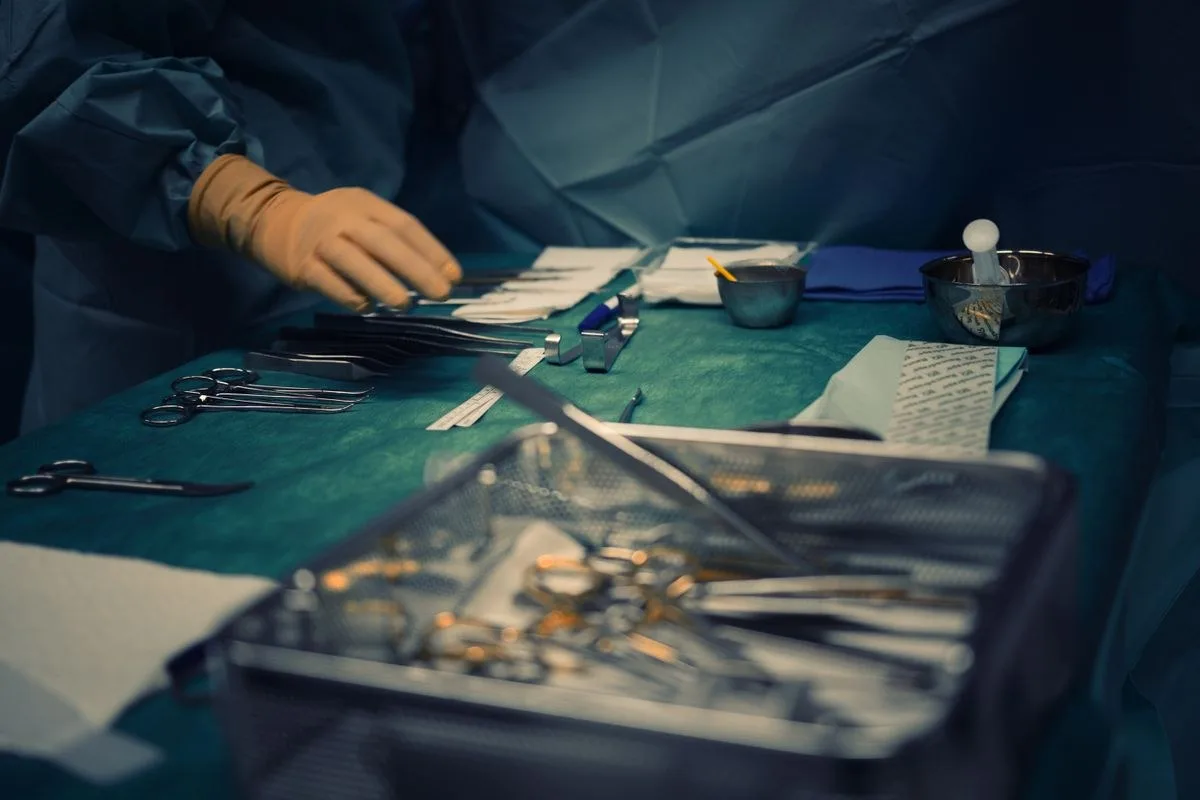
The processing begins with the area to be removed marked when the patient is standing and lying. This drawing allows for pre-limiting the amount of tissue to be taken.
Local anesthetic is then applied to the area; the patient is awake but does not feel pain. It can also be planned with sedation when necessary.
The excess skin is removed within the marked boundaries and the edges are closed with stitches that can melt by zooming closer together.
The incision lines are placed in the natural fold lines of the tissue to reduce the likelihood of trace residue. The preservation of nerve and vascular structures around the clitoris is the most critical detail of the technique.
Different incision plans may be preferred based on the direction of the excess in the hood. If the excess is collected more on the sides, the incision is planned to the sides, and if it is prominent in the vertical direction, towards the upper region. This choice is made based on the patient's anatomy and the patient is told before the procedure which plan to implement.
The process is usually completed under one hour; When done together with internal lip reduction, the time increases somewhat.
Then the area is covered and the patient returns home on the same day after a brief rest. Care and pain relief instructions to be applied on the first days are given in writing.
Can clitoral hood reduction and labiaplasty be performed together?
Because the two processes concern the same anatomical region, they are often planned in the same session. In this way, the patient has undergone a single period of preparation and a single period of recovery.
The extent to which the procedure will be performed is determined by the source of the complaint in the examination and decided together with the patient.
Comparison: Hudoplasty ; Labiaplasty; When done together
Target texture: The skin fold (covering) covering the clitoris; Internal genital lips; Hood and inner lips
Indication: Friction due to excess of hood, difficulty in hygiene, reduction in arousal; Friction and compression complaints due to excess lip; Disproportionate view after multiple or single operations in two regions
Anesthesia: Local anesthesia; Local anesthesia; Local anesthesia, accompanied by sedation when necessary
Clitoris tissue: Untouchable; Untouchable; Untouchable
Recovery: The swelling lasts a few weeks; The swelling lasts a few weeks; Recovery time does not significantly extend
Togetherability: It can be done alone; It can be done alone; It is often preferred to be applied in the same session
Only shrinking the lips and leaving them as the hood is likely to produce a need for later correction.
Therefore, the ratio of the two regions to each other is evaluated in the first examination. A second preparatory period and a separate recovery process are not required in the planning of the same session.
Recovery Process and Aftercare

In the first days, swelling, tenderness and mild bruising in the area are expected findings.
It takes several weeks for swelling to noticeably decrease; The last view may take longer to sit. Therefore, it would not be the right approach to evaluate the result by looking at the image in the first weeks.
Keeping the area clean and dry, following the washing pattern described by the physician
Avoiding tight clothing and friction-creating fabrics in the early days
Delaying heavy exercise, cycling, and pool use during the period specified by the physician
The use of painkillers only in the recommended form and not interfering with the stitches
Increased pain, bleeding, foul-smelling discharge or use of control in case of fever
In the early days, cold compresses applied to the area help reduce swelling; The duration and frequency are adjusted according to the physician's description. Preferring abundant and cotton underwear reduces friction. Avoiding sitting for long periods of time is also a simple measure that provides relief in the early period.
There is no single standard time for sexual intercourse to return; the physician makes this decision by looking at the progress of recovery. Early intercourse can lead to the opening of the suture line and delaying recovery. Control examinations are planned to see if the tissue has healed in the expected way.
Hudoplasty Risks and Possible Complications
Like any surgical procedure, hudoplasty has risks, and these are clearly discussed before the decision. The most important risk is the removal of excess tissue. In such a case, the clitoris remains exposed more than it should and loses its protective cover to a large extent.
Excessive exposure can lead to increased sensitivity due to constant friction, pain in contact with clothing, and an ongoing discomfort during the day.
Correcting this table is often not easy, because the skin removed cannot be put back. This risk explains why the measured approach is indispensable.
There is a dense neural network around the clitoris. Damage to these structures can cause permanent changes in the way that it decreases sensation or unexpectedly increases.
Therefore, maintaining nerve and vascular structures during surgery is as important as the amount of tissue removed.
More rare problems include bleeding, infection, opening in the sewing line, asymmetry between the two sides and trace formation. Most of these conditions can be managed when detected early.
Nevertheless, it must be kept in mind at the decision-making stage that the return of the transaction is difficult.
Conclusion
Samsun hudoplastyIt is a limited comprehensive procedure to address friction and cleaning difficulty complaints that make daily life difficult in the right-chosen patient.
The procedure does not touch the clitoris itself; Only the excess of the skin fold that covers it is reduced in moderation. This distinction eliminates much of the misinformation about the subject.
The healthyness of the decision depends on the fact that the complaint is indeed caused by an anatomical excess, which is revealed in the examination. Surgery is not recommended for the purpose of changing a normal anatomy. The risks of the procedure, recovery time and return are difficult to talk about in detail before the decision is made.

Original Turkish content prepared and reviewed by
Prof. Dr. Aşkı Ellibeş Kaya
Specialist in Obstetrics and Gynecology
Last updated: 25 August 2026
The content on this page is intended for informational purposes; the diagnosis and treatment decision is made only with your physician after the examination.
The information on this page is for general informational purposes only and does not replace medical advice, diagnosis or treatment. Each patient's condition is different; the method and process to be applied is determined only by the physician after examination and evaluation.
Frequently asked questions
Oh, no. In the process, the clitoris tissue is untouched, no part of it is removed, and it is not reduced. Surgery is intended only for the excess part of the skin fold that covers the clitoris. Part of this fold is necessarily left in place to maintain its protective function; The target organ itself is not involved at any stage.
Related Services
Other topics under the title Genital Aesthetics.


Start with an appointment
Let us determine the day and approach that best suits you. Your consultations are conducted on a privacy basis.