
Samsun Midface Filler
Medium face filling; An applet is an application aimed at supporting the loss of volume in the eye and cheek area without surgery. We determine its scope along with the facial analysis that we performed on the examination.
Overview of Medium Face Fill
Medium face filling; Loss of volume in the midface area is an aesthetic method applied to relieve sagging and dynamic lines. Over time, the decrease in volume in areas such as cheekbones, eyeballs and nasolabial grooves can make the overall appearance of the face tired and tense.
The volume lost by placing hyaluronic acid-based fillers in these areas is supported and the facial contours can be restored to a more balanced appearance. The scope and results of the application vary from person to person, so we plan the process with a thorough examination and evaluation.
Signs of aging on the face are not just wrinkles; Over time, decreasing volume is also an important factor that disrupts the overall balance of the face. The middle face is one of the areas most significantly affected by this change, and the loss of support here can also indirectly affect the appearance of neighboring areas such as the eyelid and jawline.
For this reason, midface filling is considered a method of supporting the whole face rather than a local intervention; not requiring surgery is one of the reasons that increases interest in this method.
In our private practice in Samsun Atakum, we offer face and skin aesthetics applications under the same roof as our expertise in women's diseases and childbirth. A detailed skin and facial analysis is performed prior to mid-face filling to create a personalized plan.
What is a Middle Face Filler?
The middle face; The eyelid is a large area spanning cheekbones, undereye area and cheeks, extending from the lower border to the upper lip level. Since this area forms the overall frame of the face, the entire face may look more collapsed and tired when the volume loss occurs here.
Decreased collagen production with age, displacement of fatty tissue, decreased skin elasticity and mild resorption in bone structure are among the main causes of this change in the middle face.
Medium face filling is a minimally invasive practice that aims to give volume to this area and support facial contours without the need for surgery. The goal is not to make the face look different than it is; By restoring the natural volume lost to a certain extent, it is to achieve a balanced appearance that is consistent with the region's own lines.
The practice can often include the subocular region; But the mid-face filling deals with a wider area, namely the cheek, cheek and nasolabial region as a whole.
Not only a single point, but the overall volume balance of the region is assessed and the application is planned. This holistic approach contributes to making the result look more harmonious and natural.
Compared to surgical facelift operations, midface filling is a preferable option as the recovery time is short and offers a quick return to daily life.
However, these two methods are not direct alternatives to each other; which approach will be appropriate depends on the skin structure of the person and the degree of volume loss. Surgical options may also be included in the assessment in cases with advanced sagging.
Conditions That Can Apply Filling to the Middle Face Region
Some changes that occur over time in the mid-face region can create a reason for the evaluation of filling application.
It is decided after a thorough examination which of these conditions are appropriate for the person; it is not necessarily necessary for each symptom to require filling.
These symptoms usually occur not alone, but several together, such as loss of volume in the cheeky area, which may eventually pave the way for a deepening of the nasolabial groove.
Therefore, when evaluating, the entire face is treated as a whole, not focusing on just one area.
Straightening and loss of volume in cheekbones
Pithole and shading under the eye (tear though zone)
Deepening in the nasolabial grooves (nose-lip fold)
sagging on the cheeks and decreasing fullness
Light volume asymmetry between the two halves of the face
The appearance of a tired and collapsed facial expression

Hyaluronic Acid and Other Filling Materials
The most frequently preferred material in the midface filling is hyaluronic acid-based fillers, which are also found in the natural structure of the skin. These substances are naturally broken down by the body over time, while providing volume to the tissue thanks to its moisture retention feature.
They are widely preferred due to their biocompatible structure, and their ability to be retrieved with a special solvent when necessary provides an additional safety advantage.
In some cases, calcium hydroxyapatite-containing fillers may also be preferred; This group can usually maintain its effect for longer periods of time and may have a supportive effect on collagen production on tissue. What material to use is determined by the needs of the region, the intended outcome, and the findings of the examination; More than one type of material can be combined in a single session.
The consistency of the fillers also varies by region; In more superficial areas, softer, and in areas where support is needed, such as applets, denser textured products may be preferred. When the selection of materials is planned together with the application technique, the result is intended to be more natural in both touch and appearance.
In the selection of the filler to be applied, one's skin thickness, age and intended result are evaluated together. In younger and thinner skins, smaller amounts of softer textured products are preferred, while different textured products can be used together in areas with more pronounced loss of volume.
Hyaluronic acid-based filling: is the natural moisture retaining component of the skin; The mean permanence varies from 6 to 18 months, often used in the undereye, applet and nasolabial groove, and can be melted with a special solvent.
Calcium hydroxyapatite-based filling: mineral content, with a denser texture; The mean permanence is between 12 and 24 months, usually preferred in areas where applets and support are required, while retrieval is more limited.
The duration of permanence in both groups varies from person to person; These values offer an average frame.
Who Is Medium Face Filler Suitable For?
Medium face filling is an option that is often evaluated for adults who notice a loss of volume on their face and do not want a surgical procedure. People who have no serious sagging yet in their skin, but who experience flattening in the cheek and cheek area, with appropriate and realistic expectations of overall health are evaluated among the candidates for this practice.
The final decision on whether the application is suitable for the person is made after the facial analysis and health history assessment during the examination.
When it comes to one of the following situations, practice is not recommended or postponed by physician evaluation.
While there is no specific age limit for mid-face filling, it is more often preferred during adulthood when volume loss becomes noticeable. A person's skin quality, overall health status and expectations are as important factors in determining the candidacy as age; Therefore, the final decision is based on personal evaluation rather than a standard age range.
In addition to gynecologic follow-up, opting for a holistic, obstetrician physician that approaches skin health may provide a safer evaluation process, especially during special periods such as pregnancy or breastfeeding. Prior to application, the process is shaped by taking into consideration the general health condition of the person, past diseases and the medications he or she uses, if any.
Active skin infection in the application area
Having a known allergy to the filling content
Uncontrollably watching autoimmune disease
Pregnancy or breastfeeding period
Bleeding disorder or the use of blood-watering drugs

How to Apply Medium Face Filler?
At the first meeting, the person's medical history, if any, previous aesthetic practices and expectations are reviewed together. If necessary, a photo recording can be taken so that a comparison can be made before and after the application. This preliminary assessment allows the process to progress faster and more planned on the day of implementation.
Before application, the face is evaluated in detail under light; By identifying the points where volume loss is intense, a personalized application plan is created. At this stage, expectations are heard and a realistic outcome framework is set together. If deemed necessary, the planned points are marked on the skin and reviewed once more before application.
Prior to application, the area is cleaned with an antiseptic solution and is expected for about 15-20 minutes by applying topical anesthetic cream on the skin surface. In this way, the discomfort felt during the process is tried to be minimized. The contents of some fillers may also contain a relaxing component; This is a factor that increases comfort.
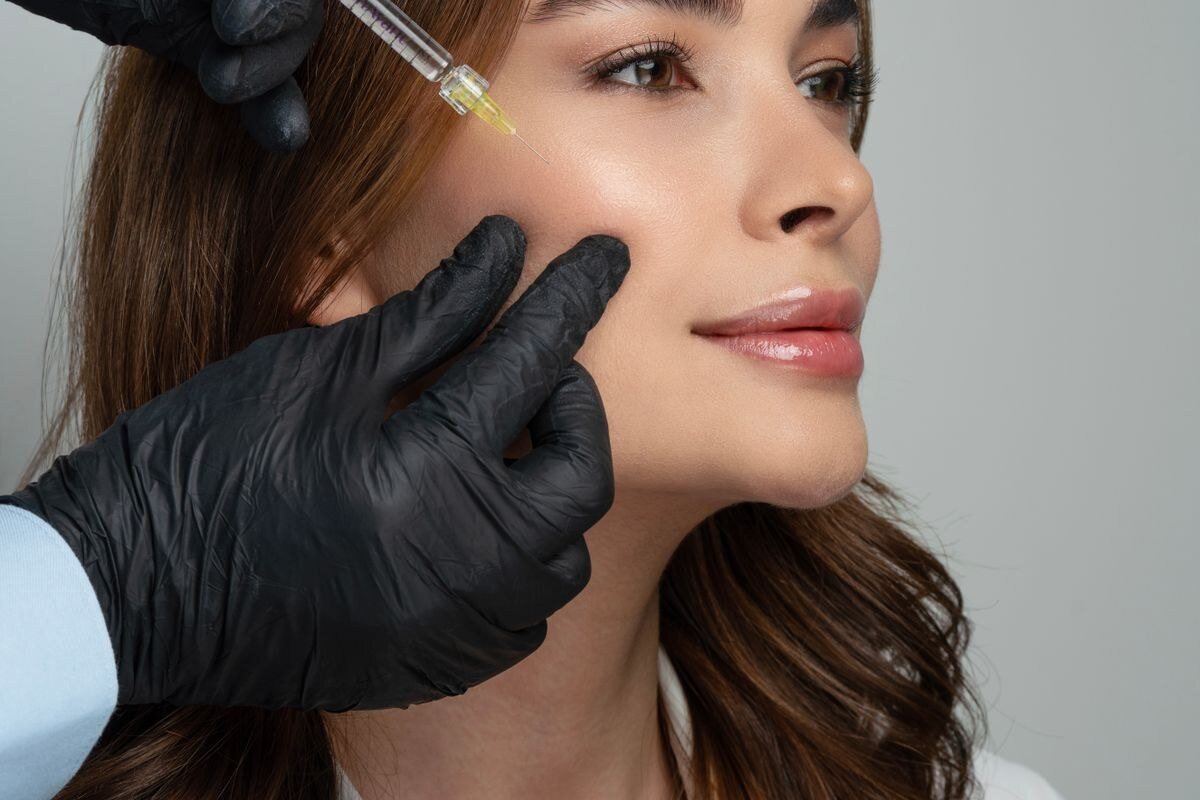
The filler is placed on the plane or targeted tissue layer on the bone membrane (superperiostal) with the help of a cannula or fine needle. Different placement methods such as linear, dotical or fan technique may be preferred by region.
Once the placement is complete, a light massage is applied to the area, allowing the filling to spread harmoniously with the tissue, and symmetry is checked.
The entire process takes an average of 20-40 minutes, depending on the number of areas applied and the amount of material used. After the procedure, a person can return to their daily life on the same day; However, it is recommended to apply pressure to the area in the first hours and avoid heavy makeup. If necessary, a short-term cold application to the area is performed to prevent possible swelling.
The Recovery Process After Middle Face Fill
The healing process is usually short and comfortable, as the midface filling is not a surgical procedure. Immediately following the application, slight redness and swelling can be seen in the area; These symptoms usually spontaneously regress within 2-3 days.
Small bruises may occur in some people; however, this condition is rare and disappears within a few days.
It is considered normal to appear fuller in the first days than the area is due to swelling; This is a temporary condition and diminishes over time. Therefore, it is more accurate to evaluate the results not immediately in the first days, but after the filling has been fully seated.
Speed of recovery process; The skin structure of the person may vary depending on factors such as the area applied and the amount of filling used.
Factors such as smoking and irregular sleep can also negatively affect recovery. Therefore, following the recommendations given before and after the process contributes to making the process more comfortable.
First day: mild swelling, redness and tenderness with touch can be seen
Day 2-3: swelling and redness greatly declines
First week: small bruises begin to fade if available, daily activities can be easily sustained
Week 2: The filling sits completely and the final appearance becomes clear
Midface Fill Post Maintenance
Paying attention to a few simple suggestions after the procedure supports the healing process and can reduce the frequency of possible side effects. These proposals also contribute to the placement of the filling as expected.
A planned check-up examination during this period may be useful in assessing whether the result is sitting as expected. If any asymmetry or unexpected situation is noticed, it will be reviewed together at this check-up.
It is important not to rush through the maintenance process and allow the filling to settle naturally; it should also be noted that it is not overheated to the area in the first days.
In the first 24-48 hours, environments such as intense sports, saunas and steam rooms should be avoided.
No unnecessary pressure or massage should be performed on the area where it is administered (except for those recommended by the physician)
Protective measures must be taken before direct exposure to the sun
It is recommended that no makeup is applied on the first day and the area is kept clean.
Plenty of water consumption and balanced nutrition can support recovery
Alcohol consumption should be limited for the first few days
If an unusual symptom is noticed, contact the physician without losing time.
Possible Side Effects After Middle Face Fill
Although medium face filling is a practice that is considered safe, it can be faced with some side effects, as with any medical procedure. Most of these effects are mild and temporary; However, more serious situations can rarely develop.
Application with appropriate technique by an experienced physician plays an important role in reducing the risk of side effects.

Common Side Effects
These symptoms are usually caused by a temporary response to the tissue, and it spontaneously regresses within a few days; no additional treatment is needed. Simple measures such as cold compresses can help reduce symptoms more quickly.
If swelling or tenderness lasts longer than a few days, it is recommended to contact the physician for an additional evaluation.
Mild swelling and redness in the application area
Mild pain with temporary tenderness or touch
Small bruises
Temporary stiffness or feeling of fullness in the area
Tiny needle marks at application points
Rare Complications and Emergencies
It is very rare, but serious complications such as vascular congestion and infection have also been reported. Such conditions require immediate medical attention; Therefore, it is of great importance that the practice is performed by an experienced physician in sterile conditions and with accurate anatomical knowledge.
An unexpected asymmetry or nodule formation is also among the rare cases and should be evaluated under physician supervision.
If symptoms such as sudden and severe pain, color change, skin bleaching or bruising are noticed in the area after application, the physician should be consulted without delay. An early noticeable complication can often be managed without a permanent problem occurring.
In the prevention of these complications, mastering the vascular anatomy of the region and implementation by slow, controlled movements play a decisive role.
Conclusion
Midface filling is an aesthetic application aimed at supporting loss of volume in the midface region without surgery. The results vary according to the person's skin structure, age and filler used.
Therefore, it is important to make decisions with realistic expectations and after a thorough examination. Proper planning and experienced physician practice play a decisive role in making the process comfortable.
An appointment can be made at our office for questions of interest and a personal fitness assessment. A face-to-face consultations will help clarify personal expectations and possible implementation plan.

Original Turkish content prepared and reviewed by
Prof. Dr. Aşkı Ellibeş Kaya
Specialist in Obstetrics and Gynecology
Last updated: 6 August 2026
The content on this page is intended for informational purposes; the diagnosis and treatment decision is made only with your physician after the examination.
The information on this page is for general informational purposes only and does not replace medical advice, diagnosis or treatment. Each patient's condition is different; the method and process to be applied is determined only by the physician after examination and evaluation.
Frequently asked questions
No, the discomfort felt through topical anesthetic cream applied before the procedure is usually very little. A person may have a slight stinging or feeling of pressure relative to the pain threshold; This feeling is usually short-lived.
Related Services
Other topics under the title Face Operations.



Start with an appointment
Let us determine the day and approach that best suits you. Your consultations are conducted on a privacy basis.