

Why Does Urine Leak When Laughing?
Why does urine leak when laughing? Learn about stress incontinence in women, possible causes, clinical assessment, pelvic floor care, and treatment options.
Urine leakage when laughing can result from sudden bladder pressure and reduced pelvic floor support in women; a clinical exam can clarify the underlying cause.
Even a few drops of leakage are worth discussing if the problem recurs. This pattern often points to stress urinary incontinence, but the timing of the leak, a possible sudden urge to urinate, and the woman's stage of life all matter when deciding what to assess.
Within the women's health services offered by Prof. Dr. Aşkı Ellibeş Kaya, urinary leakage is considered alongside the patient's history and examination findings. This article explains common causes of leakage with laughter and the usual steps in a clinical evaluation.
Urine Leakage When Laughing And Stress Incontinence

Laughing briefly increases pressure inside the abdomen. If the pelvic floor and the tissues that support the urethra cannot counter that pressure, urine may escape. The same woman may notice leakage when coughing, sneezing, running, or lifting something heavy.
The word “stress” here describes physical pressure on the bladder. It does not mean that the leakage is caused by emotional stress or that the patient is doing something wrong.
Stress, Urgency And Mixed Incontinence
With stress incontinence, leakage usually happens at the same moment as a movement or rise in pressure. With urgency incontinence, a strong and sudden need to urinate comes first, and urine may leak before the person reaches a toilet. Mixed incontinence includes features of both.
The distinction affects treatment. Saying “I leak when I laugh” does not establish the type on its own. A clinician will also ask about urgency, daytime frequency, other triggers, and whether leakage occurs at other times.
Causes Of Urine Leakage When Laughing In Women
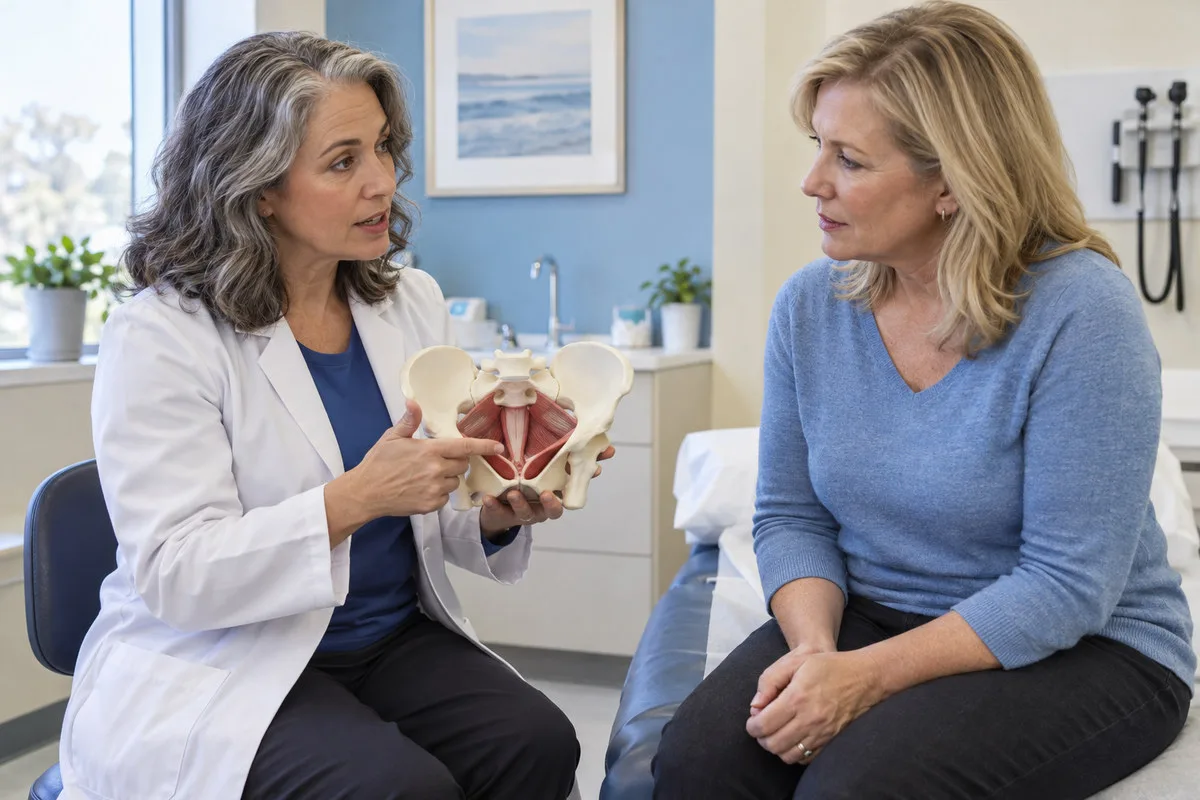
Pelvic floor muscles help support the bladder and urethra. Leakage can occur when muscle strength, tissue support, or the urethra's closing function is reduced. More than one contributing factor may be present.
Pregnancy And Changes After Childbirth
Pregnancy places additional load on the pelvic floor. Childbirth can stretch or strain muscles, connective tissues, and nerves in the area. Leakage with laughing may therefore begin during pregnancy or after birth, although its course differs from one woman to another.
If leakage continues after childbirth, an assessment is more useful than assuming it will always resolve without help. An examination can consider pelvic floor function and whether pelvic organ prolapse is also present.
Menopause, Weight, Cough And Constipation
Changes around menopause can affect tissues near the urethra and bladder. Menopause alone does not explain every case; age, previous births, symptoms, and examination findings need to be considered together.
Excess weight, a persistent cough, and chronic constipation may increase strain on the pelvic floor. Identifying factors that can be changed helps make the care plan more specific to the person.
How Urine Leakage When Laughing Is Assessed

The first step is a conversation about when leakage began, how often it happens, how much urine is lost, and which activities trigger it. Pregnancy and birth history, menopause, medicines, urinary habits, and any sudden urge to urinate also provide useful clues.
Pelvic Examination, Urine Test And Bladder Diary
A pelvic examination can assess muscle function and the structures that support the bladder. When appropriate, the clinician may check whether coughing causes a leak. A urine test helps identify findings such as infection or blood that need separate attention.
A short bladder diary records drinks, toilet visits, urgency, and leakage episodes over several days. It can reveal patterns that are easy to miss from memory alone. Urodynamic testing is not a routine requirement for every woman; it may be considered when the diagnosis is unclear or particular treatment decisions require more information.
Treatment Options For Urine Leakage When Laughing

Treatment depends on the type of incontinence, how bothersome it is, and any other pelvic symptoms. Pelvic floor muscle training and modifiable factors are often addressed first. No single approach produces the same result for everyone.
Pelvic Floor Muscle Training And Daily Habits
Pelvic floor exercises, often called Kegel exercises, involve contracting and relaxing the correct muscles. Practising with the wrong muscles or only occasionally can limit the benefit. An examination and, when needed, a supervised programme can help ensure the technique is appropriate.
Weight management when relevant, managing constipation, and addressing a long-lasting cough may also help. Cutting fluids without advice is not a reliable solution. If urgency symptoms coexist, bladder training may be considered as part of the plan.
When Surgery May Be Discussed
Surgical options may be discussed when stress incontinence significantly affects daily life and initial approaches have not provided enough improvement. Examination findings, prolapse or urgency symptoms, previous treatment, and the woman's preferences all influence this decision.
Potential benefits and risks should be reviewed for the individual. Leakage during laughter does not automatically mean an operation is needed.
When To Seek Medical Advice
An evaluation is appropriate when leakage recurs, limits exercise or social activities, or persists after childbirth. During a visit with a Samsun gynecologist, describing the exact triggers and any accompanying symptoms can make the assessment more useful.
Blood in the urine, pain while urinating, marked pelvic pain, or difficulty emptying the bladder should prompt timely medical attention. These symptoms may need evaluation beyond stress incontinence.
Conclusion
Urine leakage when laughing is commonly associated with stress incontinence in women, but it should not be assigned a cause without considering the whole picture. Birth history, menopause, pelvic floor findings, and urgency symptoms guide the next steps. Learn more about urinary incontinence assessment and treatment options.

Original Turkish content prepared and reviewed by
Prof. Dr. Aşkı Ellibeş Kaya
Specialist in Obstetrics and Gynecology
Last updated: 12 October 2026
The content on this page is intended for informational purposes; the diagnosis and treatment decision is made only with your physician after the examination.
Frequently asked questions
It is common, but it is not an unavoidable part of being a woman or getting older. Recurrent leakage is worth assessing, even if the amount is small.
Other Writings
Informative content prepared by the physician on similar subjects.




Start with an appointment
Let us determine the day and approach that best suits you. Your consultations are conducted on a privacy basis.