

What Happens At The First Pregnancy Appointment?
Learn what happens at your first pregnancy appointment: when to book, how to prepare, ultrasound, possible tests and planning the next steps.
The first pregnancy appointment covers your medical history, an assessment of the pregnancy and a personal plan for tests and follow-up based on your own needs.
Knowing what to expect after a positive pregnancy test can make the visit easier to prepare for. The visit depends on your symptoms, history and stage of pregnancy.
This guide explains the first-visit process for people preparing to see Prof. Dr. Aşkı Ellibeş Kaya. It provides general information and does not replace an individual examination or medical advice.
When Should The First Pregnancy Appointment Take Place?
Contact a healthcare provider after a positive pregnancy test to arrange your first visit. Timing depends on your last menstrual period, symptoms and medical history. You do not need to wait for a particular scan milestone before seeking help for pain or bleeding.
Mention previous ectopic pregnancy, pregnancy losses, long-term conditions or regular medicines when booking. After fertility treatment, follow your treating team's appointment plan.
Preparing For The First Pregnancy Appointment

Gather your health information, write down questions and bring previous reports. Choose comfortable clothes; special intimate cleansing is unnecessary. You can ask about bringing a support person or arranging language assistance.
Last Menstrual Period, Medicines And Previous Test Results
Note your last period, cycle regularity and pregnancy test date, identifying any uncertainty. Mention previous pregnancies, operations, allergies and important family conditions.
List prescribed medicines, painkillers, vitamins and herbal products. Do not stop a regular medicine or change its dose yourself because of a positive test. Bring earlier blood results and ultrasound reports; they may help avoid unnecessary repeat testing.
Fasting And Bladder Preparation
The examination usually does not require fasting. Same-day tests may need preparation, so check with the clinic.
Bladder preparation depends on the scan. A fuller bladder can improve a scan through the abdomen; an empty bladder is usually preferred for a transvaginal scan. Follow the instructions given for your appointment rather than drinking excessive amounts of water.
Stages Of The First Pregnancy Appointment

The clinician asks about your concerns and explains the proposed examinations. Procedures vary between people. You can ask questions or request a pause if uncomfortable.
Medical History And Risk Assessment
The discussion covers previous illnesses and pregnancies, smoking, alcohol, work and emotional wellbeing. Diabetes, high blood pressure, thyroid disease or a history of blood clots may affect the care plan.
A risk factor does not mean complications are inevitable; it guides additional care. Discuss privacy preferences, who you want present and any concerns about examination.
General Examination, Blood Pressure And Weight
Blood pressure, height and weight may be recorded for later comparison. Your history and symptoms guide the general examination.
Pain, bleeding or unusual discharge may require an additional gynecological examination. A transvaginal ultrasound is different from a speculum or manual pelvic examination. The purpose of each proposed examination should be explained before it takes place.
What Can The First Ultrasound Assess?
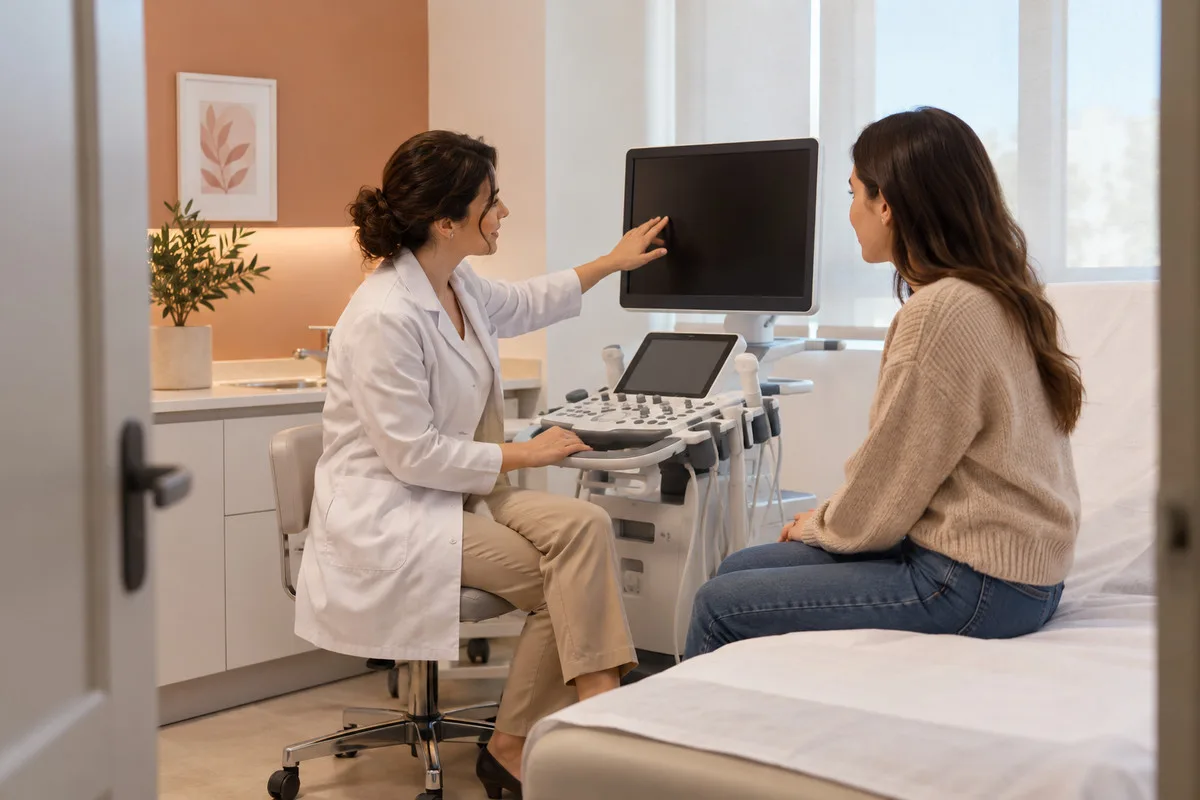
Ultrasound assesses pregnancy location and development. Findings depend on timing, scanning method and image quality. A positive test alone does not confirm pregnancy inside the uterus.
Abdominal And Transvaginal Ultrasound
For an abdominal scan, a probe moves over the abdomen. For a transvaginal scan, a thin probe with a protective cover is placed in the vagina; it does not enter the uterus. This method can provide more detailed images in early pregnancy.
The choice depends on clinical need and your consent. If you decline a vaginal scan, discuss abdominal scanning and its limitations. Another appointment may be needed. Report pain during examination.
Pregnancy Location, Dating And Cardiac Activity
The scan assesses the position of the gestational sac and, when visible, the embryo, number of embryos, measurements and cardiac activity. These findings are compared with menstrual dates. Irregular cycles or later ovulation can affect the estimate.
Very early in pregnancy, a sac or cardiac activity may not yet be visible. This alone does not establish pregnancy loss. Depending on measurements and symptoms, another scan or serial beta-hCG testing may be needed. One hormone result cannot confirm both pregnancy location and development.
Tests That May Be Arranged At The First Visit
Initial tests reflect your history, previous results and pregnancy stage. Tests are selected individually. Ask what each test checks and how to obtain the results.
Blood Count, Blood Group And Urine Tests
A blood count, blood group and rhesus status may be reviewed or checked. Urine testing and, when appropriate, a urine culture may also be arranged. A urinary infection can sometimes be identified without obvious symptoms.
Results need clinical interpretation. Do not use a flagged laboratory value alone to diagnose yourself or start treatment.
Additional Tests Based On Individual Risks
Infection screening and other investigations depend on your history, previous results and local care guidance. The need for thyroid or blood glucose assessment can vary. Genetic screening requires a separate discussion and appropriate timing.
Beta-hCG testing may help when the pregnancy's location or early development remains uncertain. It is not a test that must be repeated at every routine appointment.
Planning Care After The First Appointment

Clarify when to expect results, when to return and whom to contact about symptoms. Pregnancy care involves ongoing assessment of your health and the pregnancy, rather than a single scan.
Folic Acid, Medicines And Daily Life
Discuss folic acid and any other supplements with your clinician. The appropriate plan can differ according to medical history. Regular medicines should also be reviewed for use during pregnancy.
Discuss food, nausea, activity, work, smoking and alcohol. Ask specific questions. Avoid herbal mixtures or high-dose vitamins based only on online advice.
Timing Of Further Visits And Screening
The next appointment depends on the initial findings. An inconclusive early scan may need reassessment sooner than a routine visit. The timing and purpose of pregnancy screening tests should be explained separately; they are not all performed at the first visit.
When arranging care with an obstetrician and gynecologist in Samsun, ask how to share earlier reports and contact the team between appointments.
Symptoms That Need Assessment Before A Scheduled Visit
Do not wait for a booked appointment if you have severe or worsening abdominal pain, particularly on one side, heavy bleeding, faintness or shoulder-tip pain. These can occur with an ectopic pregnancy or another urgent condition; symptoms alone cannot identify the cause.
Seek emergency care for severe pain, fainting or a marked deterioration in your condition. In Türkiye, call 112 if emergency assistance is needed. Lighter bleeding, fever, painful urination or vomiting that prevents fluid intake also require prompt medical advice.
Conclusion
The first pregnancy appointment brings together your health history, an assessment of the pregnancy and a plan for the next steps. Bringing reports and a medicine list, noting your questions and checking preparation instructions can make the visit more useful.
Some findings need reassessment at an appropriate interval. This information is educational; individual recommendations depend on your circumstances.

Original Turkish content prepared and reviewed by
Prof. Dr. Aşkı Ellibeş Kaya
Specialist in Obstetrics and Gynecology
Last updated: 19 October 2026
The content on this page is intended for informational purposes; the diagnosis and treatment decision is made only with your physician after the examination.
Frequently asked questions
Usually not for the examination itself. If a blood test requires fasting, the clinic will provide instructions. Ask when booking rather than fasting without being advised to do so.
Other Writings
Informative content prepared by the physician on similar subjects.




Start with an appointment
Let us determine the day and approach that best suits you. Your consultations are conducted on a privacy basis.